How Psychology Built Branding. From Gestalt to the Hidden Persuaders
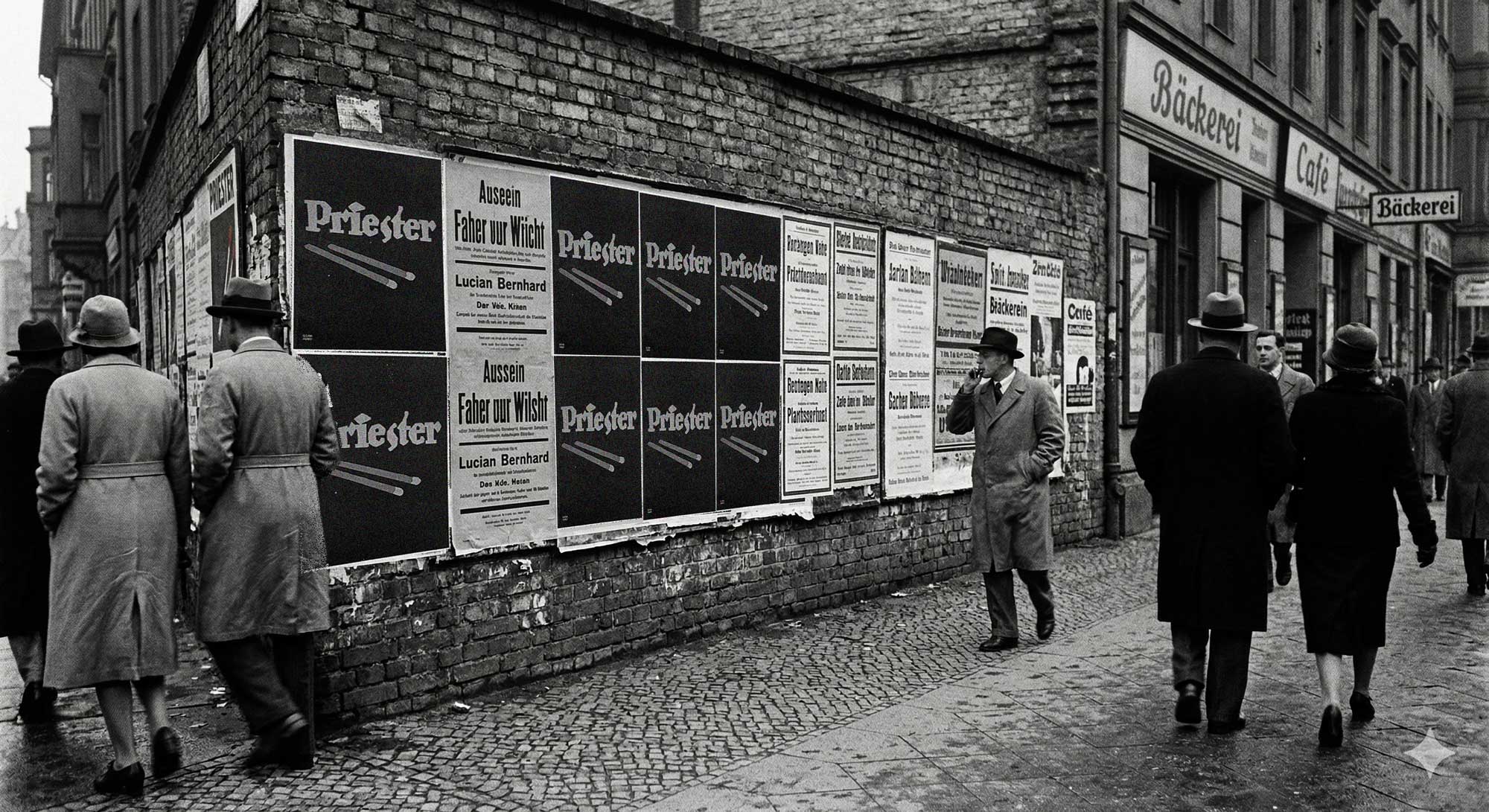
The dark arts of brand communication were forged in the laboratories of 19th-century German psychologists. It’s a lineage that moves from early experiments in human perception to the visual-verbal "syntax" we use to grab attention today.
When I was studying graphic design, I was fortunate enough to be taught design history by Brian Andrew, our head of department. He was a man of passionate delivery, and I remember being completely captivated by his lectures on the impact of pictorial modernism. It’s fascinating to me that the knowledge he shared is still so relevant; the "magic" of the hidden persuaders he described is still working overtime in our modern attention economy. Those lectures stayed with me because they revealed that our work is about understanding the deep-seated psychology of how people actually perceive it.
The foundation of this whole field was actually laid in 1893, with the birth of the Berlin School of Experimental Psychology. These early researchers were pioneers of what they called "experimental phenomenology" which is a research method that investigates conscious experience directly by systematically varying perceived stimuli, aiming to understand the structure of human perception. Instead of guessing, they focused on the raw, immediate experience of the viewer. They wanted to understand the "phenomena" of sight: how we perceive light, space, and form before our logical brain even has a chance to intervene. This radical study of the human experience was the essential spark that moved design away from "decoration" and into the realm of science.
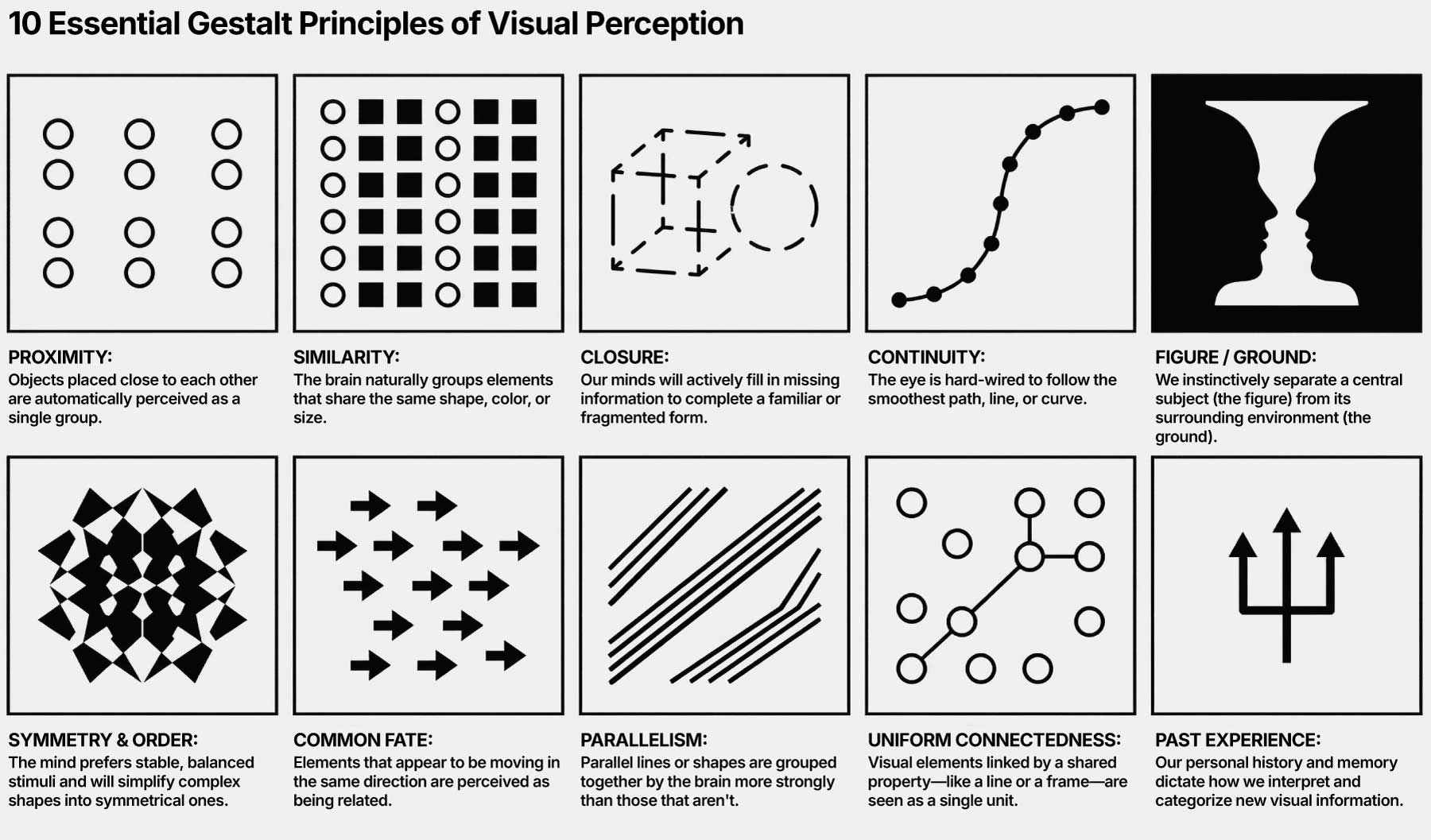
Max Wertheimer and Wolfgang Köhler, pioneering German psychologists and key founders of Gestalt psychology, discovered that the brain is essentially a pattern-seeking machine that craves simplicity. If you give the mind a fragmented shape, it will work to "close" the gap and make it a whole. These are the fundamentals we are still taught in design schools today: concepts like proximity, similarity, and closure. By understanding how the eye moves across a surface, designers could manipulate how the viewer’s eye tracks across it using visual hierarchy.
But while the Berlin School gave us the tools to manipulate perception, Edward Bernays gave us the tools to introduce emotion. As the nephew of Sigmund Freud, Bernays was the first person to take psychoanalysis out of the clinic and apply it to the masses. He realised that we don’t buy products because we "need" them; we buy them because we "desire" what they represent for our own self-image. This was the "depth approach" that Vance Packard later famously called the work of the "hidden persuaders." It’s the reason why a well-designed brand connects directly to your ambitions and identity.
When the Nazis took over in 1933 and the Bauhaus was closed, this entire structural logic was exported to the United States. Masters like Herbert Bayer imported these new ideas to New York, where they influenced a young Paul Rand who later designed iconic logos for IBM, ABC, UPS, Westinghouse, NeXT, and (The Infamous) Enron. Rand took that European modernist logic and used it to create the "Corporate Image" we recognise today. This methodology was eventually refined by pioneering agencies like Doyle Dane Bernbach, creating the advertising industry as we understand it today. It is a testament to the power of these roots that we are still using the exact same psychological foundations to navigate the chaos of the digital world today.
Bibliography
Bayer, H., Gropius, W., & Gropius, I. (1938). Bauhaus: 1919-1928. Museum of Modern Art.
Bernays, E. (1928). Propaganda. Horace Liveright.
Koffka, K. (1935). Principles of Gestalt Psychology. Harcourt, Brace and Company.
Meggs, P. B. (1983). A History of Graphic Design. Van Nostrand Reinhold.
Rand, P. (1947). Thoughts on Design. Wittenborn and Company.
Stumpf, C. (1893). Berlin School of Experimental Psychology. University of Berlin.
Wertheimer, M. (1923). Laws of Organization in Perceptual Forms.